




The Soundtrack of the Skies (Aether Skies D&D campaign setting)
Music, Noise, and Silence in a World of Engines and Storms
In Aether Skies, silence is rare.
Even at rest, the world hums—engines idling, aether lines vibrating, wind tearing at hull plating. The sky cities are never quiet. They can’t be. To fall silent is to signal danger, abandonment,  or death.
Sound is not background flavor here.
It’s culture.
It’s resistance.
It’s survival.
And sometimes, it’s a warning.
Living in a World That Never Stops Making Noise
Most fantasy worlds imagine sound as optional—music in taverns, battle cries, spell effects.
In Aether Skies, sound is constant:
-
engines chanting through metal bones
-
aether cores thrumming like distant organs
-
wind screaming through exposed struts
-
crowds shouting to be heard over machinery
People grow up learning how to listen between sounds, how to tell the difference between normal noise and the wrong kind.
Veteran skyfolk can hear:
-
a cracked bearing before it fails
-
an engine out of rhythm
-
a storm shifting pitch
-
a city holding its breath
Sound is a diagnostic tool long before it’s art.
Engine Chants: Music That Keeps Cities Alive
Every skyship, every city engine, has a rhythm.
Engine chants are call-and-response songs sung by crews while maintaining or recalibrating aether drives. They serve three purposes:
-
Timing – keeping hands and tools synchronized
-
Focus – preventing mental drift during dangerous work
-
Stability – some swear engines respond to familiar sound
These chants aren’t written down. They’re passed orally, altered by each crew, and fiercely guarded. Singing the wrong chant to the wrong engine is considered sabotage.
Among older crews, forgetting the chant is treated like forgetting a comrade’s name.
Protest Rhythms: When the City Speaks Back

When people have no official voice, they make noise.
Across the sky cities, protest rarely begins with speeches. It begins with rhythm:
-
synchronized boot-stomping on metal walkways
-
tools struck against hull plating
-
crowds clapping against engine housings
These sounds travel. They echo through city infrastructure, impossible to fully suppress.
Authorities can break gatherings.
They struggle to silence vibrations.
Kerfluffle is famous for this—entire districts communicating dissent through improvised percussion that sounds like chaos to outsiders but carries clear meaning to locals.
Forbidden Hymns & Dangerous Songs
Not all music is allowed.
Some hymns are banned because:
-
they destabilize aether flow
-
they interfere with sanctioned religious doctrine
-
they carry encoded history
-
they attract attention from the Curtain
In Theopholis, only approved harmonic structures are legal. Songs outside those parameters are labeled corruptive. Black-market hymnals circulate anyway—passed hand to hand, memorized, never written.
In Haven, some songs are forbidden because people don’t remember learning them… yet they know every word.
Silence: The Most Alarming Sound of All

In Aether Skies, silence is never neutral.
Silence can mean:
-
an engine failure
-
an area sealed by force
-
a predator masking itself
-
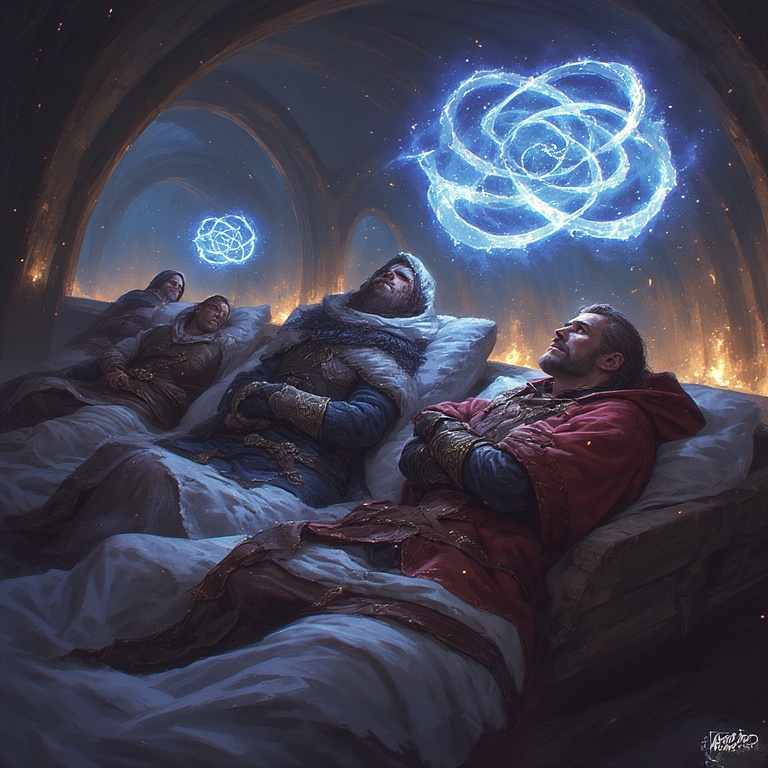
dream influence bleeding into reality
Experienced crews notice silence immediately. They stop talking. They stop moving. They listen for what should be there.
A city falling quiet is often the first sign that something has gone catastrophically wrong.
Music as Identity
Different cities sound different.
-
Orashul favors polished orchestration, controlled acoustics, and ceremonial performances
-
Granglehold is industrial percussion and constant clatter
-
Kerfluffle thrives on improvised noise and communal rhythm
-
Theopholis limits harmony to religious approval
-
Haven produces music that feels unfinished—melodies that loop or fade mid-note
Characters carry these soundscapes with them. A PC’s home city might be recognizable by how they hum while working—or by their discomfort with silence.
Using Sound at the Table (GM Tools)
Sound is one of the most underused narrative tools in tabletop play.
Techniques:
-
Describe scenes by what characters hear first
-
Signal danger by removing expected background noise
-
Let NPCs identify PCs by their footsteps or voice cadence
-
Use recurring audio motifs (engine hums, chants, bells)
You don’t need actual music—description does the work.
Player Advice: What Does Your Character Sound Like?

Encourage players to consider:
-
Do you hum while working?
-
Are you uncomfortable with silence?
-
Do you know a forbidden song?
-
What noise tells you it’s time to run?
Sound builds intimacy faster than dialogue.
Adventure Hooks Built on Sound
-
The Chant That Won’t Stop: An engine repeats a chant long after its crew is dead.
-
Silent District: A neighborhood goes completely quiet overnight.
-
The Stolen Song: A protest rhythm spreads between cities faster than ships can fly.
-
Hymn of Recall: Singing a forbidden hymn summons memories that don’t belong to the singer.
-
False Silence: A city’s noise masks something moving underneath.
Final Thought: The Sky Is Always Listening
In Aether Skies, sound carries.
It carries through metal, through cloud, through dream.
It tells stories long after people stop talking.
It betrays fear.
It signals belonging.
And when the engines finally go quiet,
the people who survive know better than to celebrate.
Because silence means
something else is about to speak.
Thanks for reading. Until Next Time, Stay Nerdy!!



No Comments